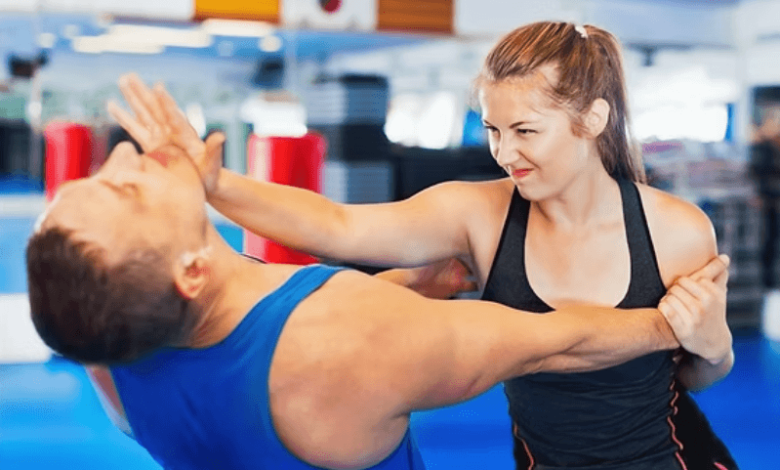
Ask most people what makes someone good at self-defense, and they’ll usually mention technique first — knowing the right move, the right escape, the right strike. Technique matters, but it’s only half the equation. The other half, often overlooked, is physical fitness. A perfectly executed technique still depends on the strength, speed, and endurance to actually pull it off under real, adrenaline-soaked conditions.
This is a distinction that reality-based self-defense schools take seriously. Training programs at facilities like SGS Krav Maga are built around the understanding that fitness and technique aren’t separate categories — they’re two halves of the same skill. This article looks at exactly why physical conditioning matters so much in a real confrontation, and what kind of fitness actually translates to self-defense capability.
Why Technique Alone Isn’t Enough
Imagine two people who know the exact same defensive technique for escaping a wrist grab. One has spent months building explosive strength, grip endurance, and cardiovascular conditioning. The other has only ever practiced the technique slowly, in a calm training environment, without any real conditioning work.
In a real confrontation, only one of them is likely to execute that technique successfully. Under real stress, movements become less precise, strength requirements increase (attackers rarely cooperate), and the entire event often unfolds faster and more chaotically than any training scenario. Fitness is what closes that gap between “knowing” a technique and being able to actually perform it when it counts.
This is one of the most consistent findings across both combat sports and self-defense research: physical conditioning directly affects a person’s ability to execute technique under stress, fatigue, and adrenaline — the exact conditions present in a real assault.
The Specific Types of Fitness That Matter Most
Not all fitness translates equally well to self-defense. Someone who can run a marathon isn’t necessarily prepared for a ten-second, all-out physical struggle, and someone who can bench press twice their bodyweight isn’t necessarily prepared to keep functioning after thirty seconds of full-exertion fighting. Self-defense-relevant fitness tends to draw on a few specific qualities:
Explosive Strength and Power
Real confrontations are rarely won through sustained strength — they’re won or lost in short, explosive bursts. The power to break a grip, drive a strike, or create separation from an attacker in a split second matters far more than steady, sustained force.
Anaerobic Conditioning
Most physical confrontations, if they happen at all, are short and extremely intense — closer to an all-out sprint than a marathon. Training the body’s anaerobic energy systems (through interval-style conditioning rather than steady-state cardio alone) builds the kind of stamina that actually matches real-world confrontation demands.
Grip and Core Strength
Grabs, holds, and clinches are extremely common in real altercations, and grip strength often determines whether someone can break free or maintain control during a struggle. Core strength, meanwhile, underlies almost every strike and defensive movement, providing the stability needed to generate power and resist being knocked off balance.
Functional Mobility
Being able to move explosively in multiple directions — not just forward and backward, but laterally and rotationally — matters more in a real confrontation than raw flexibility or isolated muscle development. Functional, whole-body movement patterns tend to translate far better to self-defense scenarios than exercises that isolate a single muscle group.
How Adrenaline Changes Everything
One of the most important, and least discussed, aspects of self-defense fitness is how the body’s stress response affects performance. When adrenaline floods the system during a real confrontation, several things happen almost immediately:
- Fine motor skills deteriorate, making complex or highly technical movements far harder to execute accurately
- Heart rate spikes rapidly, which can cause tunnel vision and auditory exclusion if the body isn’t conditioned to handle it
- Muscles can tense involuntarily, wasting energy and reducing efficient movement
- Perceived time can distort, making seconds feel much longer or shorter than they actually are
This is precisely why realistic self-defense training incorporates conditioning and scenario-based drills that intentionally elevate heart rate and simulate some of this stress response — not to make training unpleasant, but because technique that only works in a calm state often falls apart the moment adrenaline enters the picture. Training under some degree of physical stress helps the body and mind build familiarity with that state, rather than experiencing it for the very first time during an actual emergency.
See also: Discover How a Swimming Pond Vacuum Can Extend the Life of Your Pond
Measuring Combat Fitness: Why Data Matters
Traditional fitness metrics — how much you can lift, how far you can run — don’t always translate cleanly to combat-specific performance like striking speed, power, and reaction time. This gap has led some self-defense schools to invest in specialized equipment designed to measure these qualities directly.
A system like a PowerKube Combat Performance Center, for example, is built specifically to measure striking efficiency, speed, power output, and athletic endurance with precision. Rather than guessing whether training is translating into real combat fitness improvements, students can track concrete, quantifiable data over time — similar to how athletes in other sports use performance metrics to guide training decisions rather than relying purely on subjective feel.
This kind of measurable feedback matters for motivation as much as technical improvement. Seeing genuine, trackable progress in striking power or speed tends to keep students engaged with conditioning work far more effectively than vague reassurances that “it’s working.”
Fitness Considerations Across Different Groups
For Complete Beginners
Someone starting self-defense training with no fitness background shouldn’t expect to match the conditioning of an experienced student immediately. Good programs build fitness progressively alongside technique, rather than assuming a baseline level of conditioning that discourages newcomers before they’ve had a chance to improve.
For Women
Because women’s self-defense scenarios often involve a size and strength disadvantage against an attacker, training that builds explosive strength and leverage-based technique tends to be more relevant than pure endurance work. Programs that combine targeted conditioning with technique specifically designed to work against a larger opponent tend to produce more genuinely useful skill than generic fitness classes.
For Kids and Teens
Physical conditioning for younger students should be age-appropriate and focused on building general athleticism, coordination, and confidence rather than intense combat-specific conditioning. As students move into their teenage years, more targeted fitness work can be introduced gradually alongside increasingly realistic technique training.
For Older Adults
Fitness for self-defense doesn’t stop mattering with age — if anything, functional strength, balance, and mobility become even more relevant, since falls and grip strength decline are common concerns. Realistic training that includes appropriate conditioning can meaningfully improve an older adult’s ability to protect themselves, provided the program adapts intensity appropriately.
Building Fitness Into a Realistic Training Routine
For anyone looking to build genuine self-defense fitness rather than isolated technique knowledge, a few principles matter most:
- Don’t separate conditioning from technique practice. The most effective training blends the two, so students learn to execute movements under some degree of physical stress rather than only in a calm, rested state.
- Prioritize explosive and anaerobic conditioning over pure steady-state cardio, since it more closely mirrors the demands of a real confrontation.
- Track progress with concrete metrics where possible, whether through specialized equipment or simple, consistent benchmarks, to stay motivated and identify what’s actually improving.
- Train consistently rather than intensely but sporadically. Fitness gains that matter for self-defense build gradually through repeated, realistic training, not occasional bursts of effort.
Facilities that combine structured technique instruction with dedicated conditioning tools — such as sgskravmaga.com.au, which houses Australia’s only PowerKube Combat Performance Center alongside its self-defense programs — give students a way to build both halves of real self-defense capability under one roof, rather than treating fitness and technique as separate pursuits.
Final Thoughts
Self-defense training that focuses purely on technique, without genuine physical conditioning, only tells half the story. The explosive strength, anaerobic endurance, and adrenaline familiarity built through proper fitness training are what actually allow a technique to work when it matters — not in a calm demonstration, but in the chaos of a real confrontation.
Whether you’re brand new to training, a parent considering a program for your kids, or specifically looking into women’s self-defense instruction, look for programs that treat fitness as a core part of the curriculum, not an afterthought. Schools like SGS Krav Maga were built around exactly that philosophy, pairing realistic technique training with genuine combat-specific fitness conditioning for students of every age and background.