
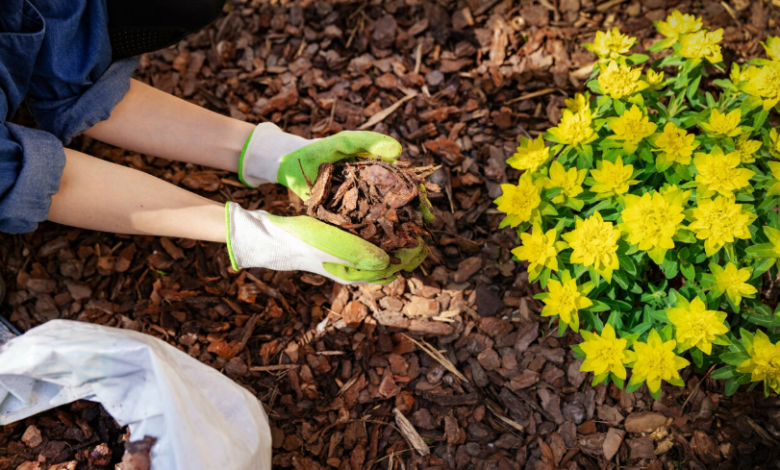
If you’re choosing between bark and wood chips for landscaping, bark is generally better for decorative beds and long-term weed control, while wood chips work best for pathways, erosion control, and soil improvement. The right choice depends on your goal, budget, and how much maintenance you’re willing to handle. Before ordering either material, it also helps to calculate volume properly—using a bark quantity estimator ensures you don’t underbuy or waste money on excess mulch. In real projects, material estimation mistakes are more common than the bark vs wood chip debate itself.
Let’s break this down clearly and practically.
What Is Bark Mulch?
Bark mulch is made primarily from the outer bark of trees—commonly pine, cedar, or fir. It’s processed into nuggets, shredded pieces, or fine bark dust.
Because bark comes from the tree’s protective layer, it decomposes slowly. That’s one reason it’s favored in ornamental landscapes.
Common Types of Bark
- Pine bark nuggets – Large, decorative pieces
- Shredded bark – Interlocking texture, better slope stability
- Bark fines – Smaller particles, used in planting beds
In residential landscaping, pine bark is widely used because it balances cost and durability.
What Are Wood Chips?
Wood chips are made from chipped branches, trunks, and sometimes whole trees. Unlike bark mulch, they contain both bark and interior wood.
They’re often produced from:
- Tree trimming operations
- Utility line clearing
- Municipal green waste programs
This means quality can vary. Some loads are uniform and clean; others contain mixed species and irregular sizes.
Appearance: Which Looks Better?
Bark typically wins in decorative settings.
It has a uniform color and texture. Pine and cedar bark give a clean, consistent look that holds its color for months.
Wood chips look more natural and rustic. In a woodland garden, that’s a benefit. In a formal front yard, it may look uneven or rough.
If you’ve noticed high-end commercial landscapes, you’ll often see bark—not wood chips—around shrubs and foundation beds. That’s intentional. Presentation matters.
Durability and Decomposition Rate
This is where differences become practical.
Bark Mulch
- Decomposes slowly
- Holds shape longer
- Requires less frequent replacement
Wood Chips
- Break down faster
- Improve soil organic matter more quickly
- May need topping up annually
According to soil science research from land-grant universities, wood-based mulches can reduce soil evaporation by up to 35–50% compared to bare soil. However, finer materials decompose faster because microbes access more surface area.
In simple terms: the chunkier the material, the longer it lasts.
See also: Why More U.S. Residents Are Switching to Recurring House Cleaning Services
Weed Control Performance
Both bark and wood chips suppress weeds by blocking sunlight. Depth matters more than material type.
For effective weed control:
- Apply 2–4 inches of mulch.
- Avoid exceeding 4 inches in planting beds to prevent root suffocation.
Shredded bark interlocks well, which reduces shifting and exposes fewer gaps for weeds. Wood chips can shift more easily, especially on slopes.
In real situations, weeds often appear not because mulch “failed,” but because it was spread too thin.
Soil Health and Nutrient Impact
Here’s where nuance matters.
Wood chips contain more carbon-rich interior wood. As microbes break it down, they temporarily use nitrogen from the soil surface—a process known as nitrogen immobilization.
Does this harm plants? Usually no.
Research indicates nitrogen tie-up mainly affects the top inch of soil. Established plants with deeper root systems are rarely impacted. Seedlings, however, can struggle if mulch is mixed directly into soil rather than layered on top.
Bark mulch, being more stable and slower to decompose, has less short-term nitrogen demand.
If improving soil structure is your priority, wood chips offer more long-term benefit. If maintaining ornamental beds with minimal soil disruption is the goal, bark is the safer bet.
Cost Comparison
Costs vary by region, but generally:
- Bark mulch: $35–$65 per cubic yard
- Wood chips: $0–$40 per cubic yard (sometimes free from arborists)
Free wood chips can be appealing. But consistency isn’t guaranteed. You might receive mixed species, varying chip sizes, or fresh green material that heats up as it decomposes.
When clients ask whether free chips are worth it, my answer is simple: for backyard paths or vegetable garden walkways, yes. For front-yard curb appeal, maybe not.
Best Use Cases
When Bark Is Better
- Decorative landscape beds
- Around shrubs and trees
- Areas needing long-lasting coverage
- Sloped flower beds (shredded bark grips well)
When Wood Chips Are Better
- Garden pathways
- Erosion control
- Large rural properties
- Soil-building projects
- Naturalized landscapes
The decision isn’t about which is “better” universally. It’s about function.
Moisture Retention and Temperature Control
Both materials regulate soil temperature and reduce evaporation.
Mulch can lower summer soil temperatures by several degrees and reduce winter freeze-thaw cycles. That protects roots and improves plant stability.
In hot climates, this moisture retention reduces irrigation frequency. Over a season, that adds up.
Environmental Considerations
Wood chips often recycle local tree waste. That reduces landfill burden.
Bark mulch, depending on sourcing, may come from sawmill byproducts. Sustainably harvested bark is common, but not guaranteed.
If sustainability matters to you, ask suppliers about origin.
Maintenance Differences
Bark needs refreshing every 2–3 years in most climates.
Wood chips may need annual replenishment, especially in high-traffic areas.
Wind movement can also shift lightweight wood chips more easily than heavier bark nuggets.
Maintenance time has a cost—even if you’re doing it yourself.
Installation Depth and Quantity Calculation
Regardless of material choice, installation depth is critical.
General guideline:
- 2 inches for decorative coverage
- 3–4 inches for weed suppression
One cubic yard covers:
- About 162 square feet at 2 inches deep
- About 108 square feet at 3 inches deep
If you underestimate volume, you’ll end up with thin coverage. Overestimate, and you’re paying for piles that sit unused.
That’s why calculating cubic yard requirements before ordering matters more than many people realize.
Final Verdict: Which Should You Choose?
Choose bark if:
- You want a polished appearance
- You prefer lower maintenance
- You’re landscaping visible areas
Choose wood chips if:
- Budget is tight
- You want soil improvement
- You’re covering large or natural areas
There’s no universal winner. Landscaping is about matching material to purpose.
If you’ve noticed some properties use both, that’s often the smartest approach—bark in front beds, wood chips in back pathways.
Think in zones. Think in function. And measure carefully before placing an order.
Because in landscaping, the difference between a professional result and a messy one often starts with choosing the right material—and ordering the right amount.


